Many drivers stopped at a checkpoint on the A-7 or the AP-7 do not realise there is a line between a fine and a criminal record. There is, and it sits at a precise figure. Below it, you deal with the traffic authority (the Dirección General de Tráfico, DGT). Above it, or if officers record that you were visibly impaired, you deal with a criminal court, usually within days.
The Spanish alcohol limits in one table
The general limit is set by article 20 of the General Traffic Regulations: 0.25 milligrams of alcohol per litre of exhaled air, or 0.5 grams per litre of blood. Novice drivers (in the two years after obtaining their licence) and professional drivers have a lower limit of 0.15 mg/l in air. The criminal threshold is fixed by article 379.2 of the Criminal Code (Código Penal): above 0.60 mg/l in air, or 1.2 g/l in blood, the offence exists automatically.
| Breath reading (mg/l) | What it is | Consequence |
|---|---|---|
| Up to 0.25 (0.15 for novice and professional drivers) | Lawful | None, unless there are clear signs of impairment |
| Above 0.25 and up to 0.50 | Administrative offence | 500 € fine and 4 penalty points |
| Above 0.50 and up to 0.60 | Administrative offence (more than double the limit) | 1,000 € fine and 6 points |
| Any reading above 0.25 plus signs of impairment | Possible crime: driving "under the influence" | Criminal case if the police file describes impairment |
| Above 0.60 | Crime under art. 379.2, regardless of symptoms | Criminal conviction and driving ban |
| Refusing the test | Crime under art. 383 | Prison of 6 to 12 months and a ban of more than 1 and up to 4 years |
The 500 € and 1,000 € figures come from article 80 of the Traffic Act (Royal Legislative Decree 6/2015), and the points from its Annex II. The 1,000 € fine also applies to a driver already fined for alcohol in the previous year. You can test your own reading against these limits with our drink-driving calculator (in Spanish).
How the breath test is carried out at a Costa del Sol checkpoint
If the first reading is over the limit, officers must take a second evidential test. You have the right to check that at least ten minutes pass between the two (article 23 of the Regulations), and courts generally rely on the lower of the two readings. You are also entitled to ask for a blood or urine test at a medical centre to contrast the result. If the contrast test confirms the breath reading, you will normally have to pay for it.
Officers then complete a form describing your appearance: speech, balance, the smell of alcohol, the state of your eyes. This "symptoms report" matters a great deal for readings between 0.25 and 0.60. With a clean report, a reading of 0.45 is normally a fine. With a report describing slurred speech and staggering, the same reading can become a criminal case.
Do not argue at the roadside. Anything you say is noted. "I only had two beers" can be written down next to a reading that suggests otherwise, and becomes evidence against your credibility.
The criminal offence: what article 379.2 actually punishes
The penalty is alternative: prison of three to six months, or a fine of six to twelve months, or community work of 31 to 90 days. In every case the court adds a ban on driving motor vehicles and mopeds for more than one year and up to four years. If the ban exceeds two years, the licence itself loses its validity and you must sit the test again (article 47 of the Criminal Code).
Spanish criminal fines are calculated in day-fines (días-multa). The court sets the number of days and a daily rate between 2 € and 400 € according to your income (article 50). A month counts as thirty days. If you do not pay, you can be ordered to serve one day of custody, or community work, for every two unpaid days.
The fast-track trial and the one-third discount
Drink driving is one of the offences that the Criminal Procedure Act sends to the fast-track procedure, the juicio rápido (article 795.1.2.ª.e). The police give you a date to appear at the duty court, normally within a few days, or take you there directly if you were arrested.
At the duty court the prosecutor announces the sentence they will ask for. If you accept it there and then, article 801 obliges the judge to reduce the requested penalty by one third, even if the result falls below the legal minimum. That discount applies to the fine and to the driving ban. You can model it with our plea-discount calculator (in Spanish).
A checkpoint at Mijas Costa
A British resident of Mijas is stopped at 1.15 a.m. on the A-7 after a dinner in Fuengirola. The two breath readings are 0.72 and 0.68 mg/l, so even the lower figure, 0.68, is above the criminal line and the offence under article 379.2 exists regardless of symptoms. She has no previous convictions and earns about 2,200 € a month. Two days later, at the duty court for Fuengirola and Mijas, the prosecutor asks for an eight-month fine at 12 € a day (240 days, 2,880 €) and a ban of fourteen months. She accepts. The discount reduces the fine to 160 days, which is 1,920 €, and the ban to nine months and ten days. The judgment is final the same morning. Had she gone to trial and lost, the court could have imposed the original 2,880 € and fourteen months, or more.
The discount is tempting, but accepting it is a guilty plea. It makes sense when the evidence is solid. It does not if the breathalyser was out of calibration, the ten minutes were not respected or the stop itself was unlawful. Your lawyer should see the police file before you decide.
Legal points worth checking before accepting a deal
- The breathalyser certificate: the device must be officially approved and within its verification period.
- The interval between the two tests and whether you were told you could ask for a blood test.
- The margin of error: readings close to 0.60 may fall below the criminal line once the permitted tolerance is applied.
- The symptoms report: whether it was written by the officers who actually saw you, and whether it is consistent with any video.
- Language: if you did not understand the warnings because no interpreter was provided, the procedure can be challenged.
Errors that make a drink-driving case worse for foreign drivers
- Refusing the test out of panic, turning a fine-level case into a prison-level offence under article 383.
- Waiving the right to a lawyer in custody, which the law permits for traffic offences (article 520.8 LECrim), and then pleading guilty without advice.
- Driving home "just this once" after the ban, which is a new offence under article 384.
- Not telling your insurer, or your employer if you drive for work.
- Assuming the case will disappear when you leave Spain. A conviction stays on the Spanish register, as our page on the Spanish criminal record certificate explains.
When there has been an accident or an injury
If someone was hurt, the case is no longer only about alcohol. The prosecutor may add an offence of injury caused by negligence and claim compensation for the victim, and the fast-track route may be replaced by a longer investigation. In that situation you should not accept anything at the duty court without a full review of the file. Our guide on how Spanish criminal cases work explains the longer route.
If you have been stopped over the limit and have a date at the duty court in Málaga, Fuengirola, Marbella, Torremolinos or Estepona, Carlos Babot can review the police file with you in English before the hearing. Call or WhatsApp +34 663 227 835, available 24 hours a day.
Common questions: drink driving in Spain
Does a Spanish driving ban apply to my UK or Irish licence?
The Spanish court bans you from driving in Spain for the period set in the judgment. Whether the ban is recorded by the licensing authority at home is a separate question that depends on that country's rules, so check it before you rely on your licence elsewhere. Driving in Spain during the ban is a further criminal offence under article 384 of the Criminal Code.
Can I refuse the breath test?
Refusing is a crime in itself under article 383 of the Criminal Code, punished with six months to one year in prison and a ban of more than one year and up to four years. That is harsher than most drink-driving sentences. You can, however, ask for a blood or urine test to contrast the breath result.
Will I go to prison for a first drink-driving offence?
It is unusual. Article 379.2 allows prison, a day-fine or community work, and first offenders without an accident normally receive a fine and a ban. Any short prison sentence imposed can usually be suspended if it is your first offence.
Does a criminal conviction for drink driving give me a criminal record?
Yes. A conviction under article 379.2 is entered in the Central Register of Convicted Persons. It can be cancelled if you do not reoffend for the period set in article 136: two years where the penalties do not exceed twelve months, three years for other less serious penalties under three years, such as a fourteen-month ban.
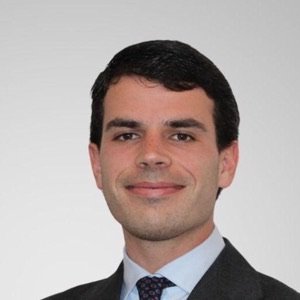
Carlos Babot Horcajadas
Spanish lawyer · Málaga Bar 10.971
Member of the Málaga Bar and managing partner of Babot-Aranguren Asociados, a firm founded in 1993. Criminal defence across the province of Málaga in English, Spanish and Italian. He reviews the content of this website himself.
Last reviewed: 2026-11-06. General information on Spanish law in force; it does not replace advice on your specific case.
Further reading